
Chicago Multifamily mCHP
Success Story: 5550 S. Dorchester Avenue, Chicago, ILHow a Chicago apartment building improved efficiency and generates its own power with a micro combined heat and power (mCHP) system
When electricity costs continued climbing and aging natural gas equipment created new challenges, the team at Fernwood Property Management began looking for practical ways to reduce operating expenses without disrupting residents.
Working with the Peoples Gas Energy Efficiency Program and trusted project partners, the team installed a mCHP system that now generates electricity on-site while helping provide domestic hot water more efficiently.
The project demonstrates how innovative energy technologies can help multifamily property owners reduce operating costs, improve efficiency, and strengthen long-term building performance using infrastructure they already have.
About the facility
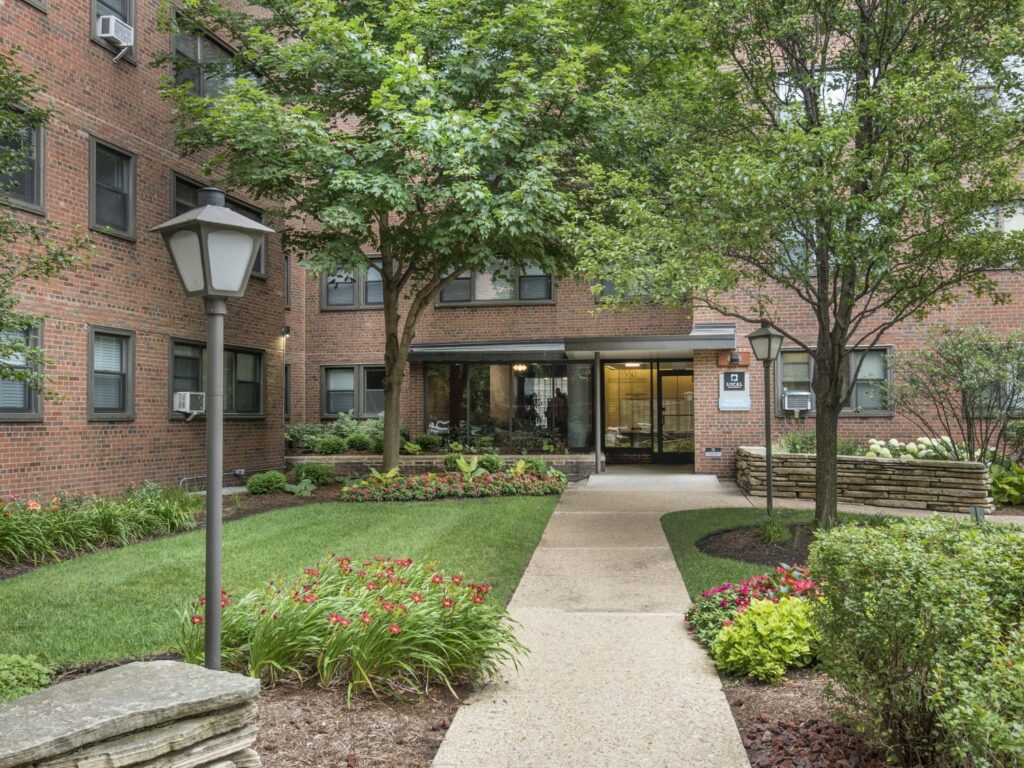
Located in Chicago’s Hyde Park neighborhood, 5550 S. Dorchester is a residential multifamily building with approximately 120 apartments. The property is part of a larger portfolio of more than 100 multifamily buildings managed by Antheus Capital and Fernwood Property Management.
For the sustainability team responsible for the portfolio, balancing operating costs, resident comfort, and long-term building performance is a daily priority. Their role includes identifying opportunities to improve efficiency, reduce energy expenses, and increase reliability across a diverse collection of multifamily properties.
Like many older Chicago multifamily buildings, 5550 S. Dorchester relies on centralized systems to provide hot water and heating. While the building was operating reliably, rising energy costs continued to put pressure on operating budgets and prompted the team to explore new approaches.
Finding a practical solution
For multifamily building owners, energy costs affect far more than utility bills. Every dollar spent on energy is a dollar that cannot be invested elsewhere in the property.
At 5550 S. Dorchester, the building’s domestic hot water system relied on natural gas equipment that was running nearly continuously to meet resident demand. At the same time, the team was closely monitoring increasing electricity costs, particularly demand and capacity charges.
The team had been evaluating CHP technologies for years. However, they wanted confidence that the technology would deliver measurable savings without creating unnecessary complexity.
There was also a broader question: could a solution like this work in a typical multifamily building, or was it only practical for large industrial facilities and campuses?
“5550 S. Dorchester is a regular old multifamily building,” explained Jon Nichols, director of sustainability for Antheus Capital and Fernwood Property Management. “It’s pretty typical of our portfolio.”
Finding a solution that delivered measurable value while fitting within existing building operations became the goal.
Discovering the opportunity
The Peoples Gas Energy Efficiency Program helped the team evaluate buildings across its portfolio and identify locations where mCHP technology could provide the greatest benefit.
The program connected the building owner with experienced trade allies, including Boilersource and Premistar, to assess the opportunity and determine how the technology could be integrated into the building’s existing infrastructure.
Rather than requiring a complete overhaul of the building’s systems, the project team identified a way to integrate the technology alongside existing domestic hot water equipment.
The result was a clear path forward that minimized disruption while helping the team understand both the technical and financial benefits of the project.
How the system works
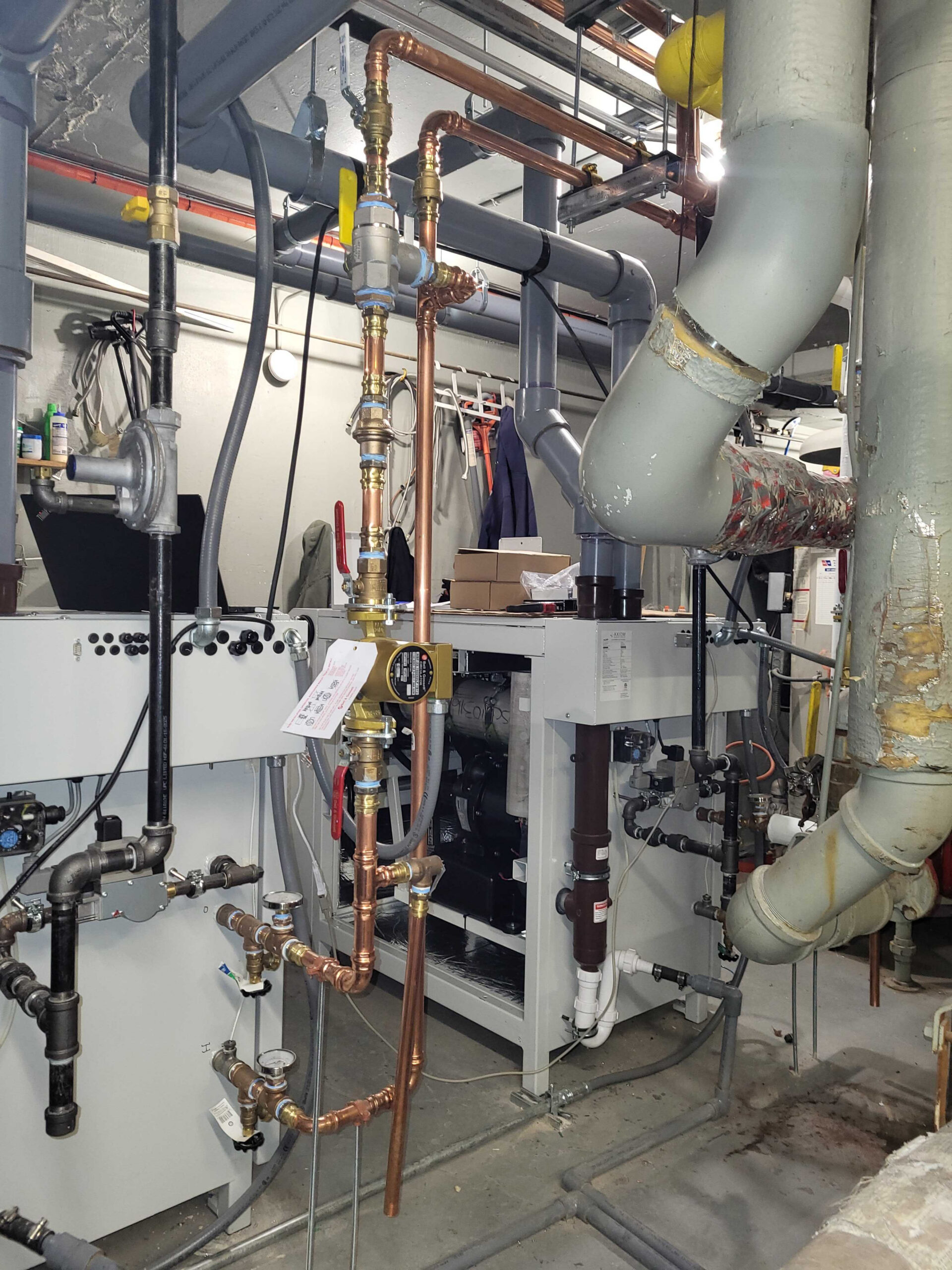
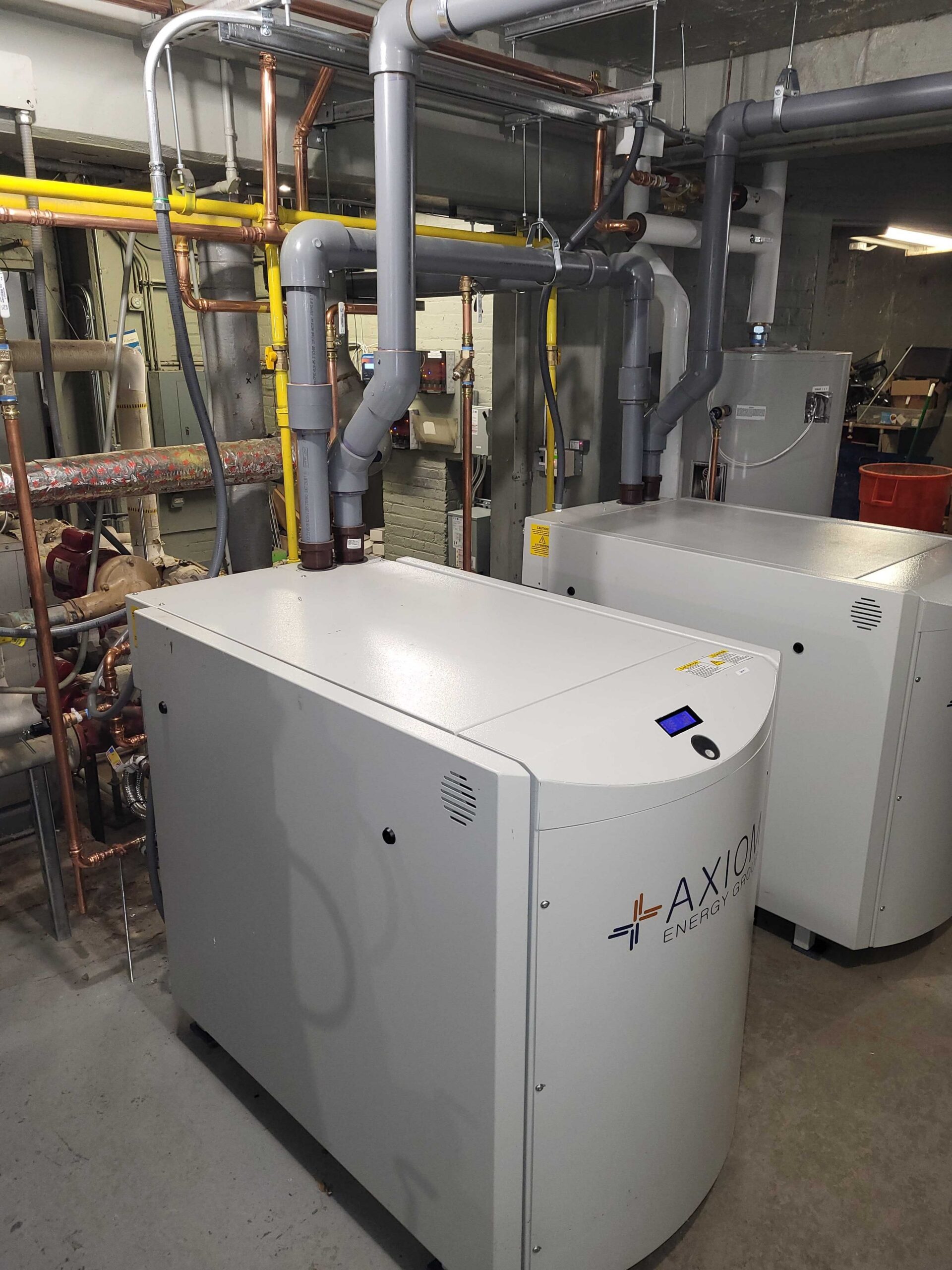
The project included the installation of two Axiom Energy 4.4-kilowatt mCHP units.
Unlike traditional CHP systems often associated with hospitals, universities, or industrial facilities, these units are compact and designed specifically for commercial and multifamily buildings.
The system performs two jobs simultaneously.
First, it generates electricity on-site that is used to offset power consumption in the building’s common areas, including lighting, pumps, and other shared equipment.
Second, it captures heat that would normally be wasted during power generation and uses that energy to preheat incoming water before it enters the building’s domestic hot water system.
Because the system works with equipment already in place, installation was completed with minimal disruption to residents and building operations.
The entire project — from site selection and design through installation and commissioning — was completed in less than six months.
Making innovation practical
One of the biggest misconceptions about CHP technology is that it is too large, too complex, or too expensive for typical multifamily buildings.
This project demonstrated the opposite.
The mCHP system was integrated into an existing domestic hot water system using equipment that fits comfortably within a standard mechanical room. It operates automatically while continuously generating value from energy the building already uses every day.
Equally important, the Peoples Gas Energy Efficiency Program helped simplify evaluation and implementation. Instead of asking building owners to become energy experts, the program provided guidance, technical support, and access to trusted partners throughout the process.
Results and future potential
The project is expected to generate approximately 50,000 kilowatt-hours of electricity annually while meeting about 20% of the building’s total electric load.
At the same time, recovered thermal energy is expected to meet approximately 55% of the building’s domestic hot water demand.
The system achieves an overall efficiency of approximately 95% by producing heat and electricity from the same fuel source rather than wasting thermal energy.
Additional benefits include lower common-area electricity costs, reduced demand on existing water-heating equipment, more efficient use of natural gas, and lower emissions.
Perhaps most importantly, the project proved that mCHP can work in a typical Chicago apartment building.
“Almost any of our legacy buildings could be appropriate,” Nichols noted.
For property owners facing rising energy costs, that may be the most valuable takeaway of all.
Explore your facility upgrade path
Innovative technologies like mCHP are helping multifamily building owners reduce energy costs, improve efficiency, and strengthen building performance using infrastructure they already have.
Interested in learning how mCHP can work for your building? Contact innovative-solutions@peoplesgasdelivery.com to discuss your options.

Talk to an expert

Become a trade ally

Find a trade ally
Energy efficiency videos